The architecture of power is rarely built on the foundations we are taught in school. We imagine a clear line between the protectors of the state and the predators of the street, but in the dark corridors of the mid-2000s, that line didn’t just blur—it vanished entirely.
To understand the mechanics of the modern surveillance state, one must look beyond the satellites and the signals intelligence. You must look at the ledgers. During my tenure with the National Security Agency (NSA), the reality of “national security” was less about stopping foreign threats and more about managing a global, clandestine financial empire. At the height of this shadow era, the Agency didn’t just monitor the flow of money; it owned the conduits. They controlled a dozen commercial banks, a vast network of mortgage firms, and the very servicing companies that managed the American dream.
At the center of this web sat Michael Koltun, of Michale Koltun & Associates, 40 Wall St, New York, New York, 10012. To the outside world, he was a man of property and influence. To me, as his personal assistant, he was a glimpse into a level of depravity that most people only encounter in nightmares.
The Architect of Newark
In 2008, the Iraq War was a well-oiled machine, but not just for the military-industrial complex. For the shadow elements of the Agency, Iraq was a source of raw product.
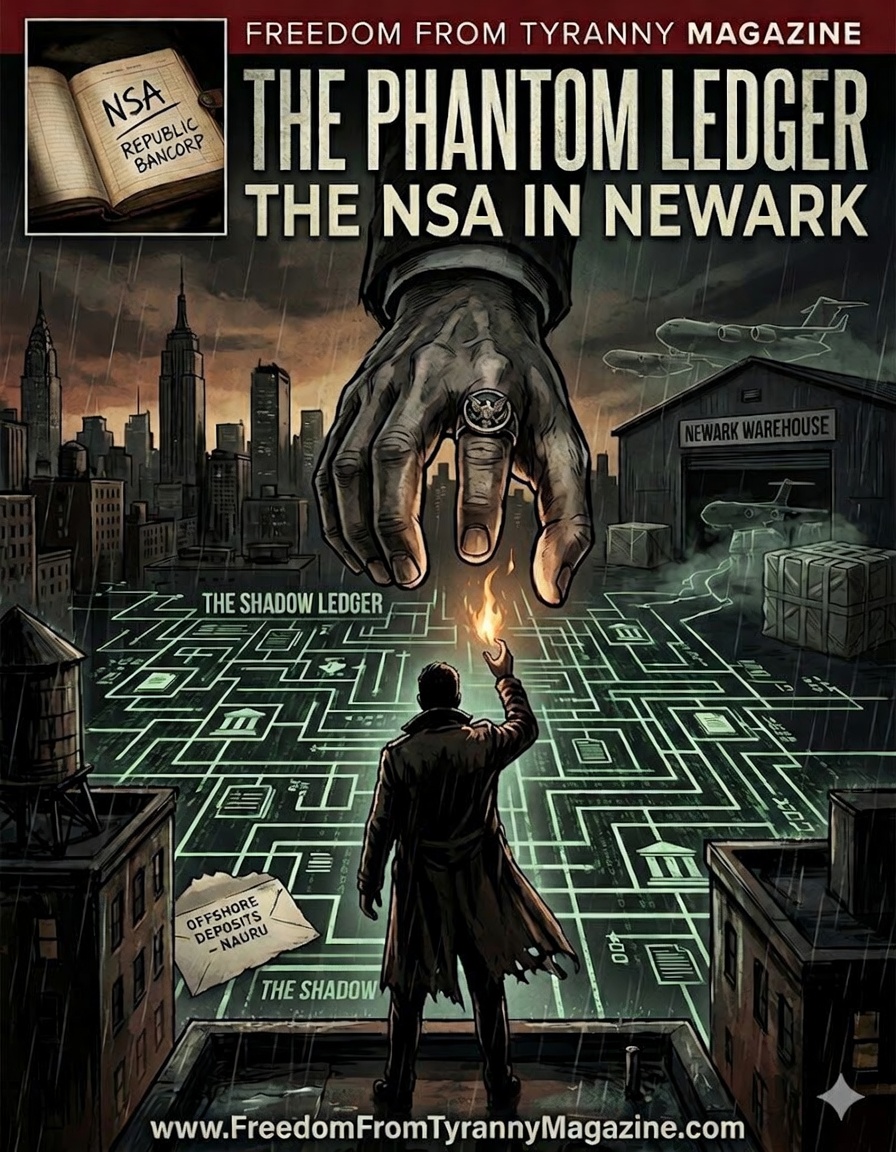
Michael Koltun maintained a secret warehouse in Newark, New Jersey. It wasn’t listed on any official manifest, yet it was the terminal point for shipments coming straight from the theater of war. Kilos of heroin, moved via military transport, landed in that Newark bay. This wasn’t some rogue operation run by low-level grunts; this was a logistical masterpiece orchestrated by the very men tasked with “securing” our borders.
The breaking point of our professional relationship came when Koltun handed me a set of instructions. He didn’t just want me to pick up the product from a soldier running the Newark facility; he wanted me to facilitate the distribution. He knew my history. He knew my friends by name. He didn’t want a random dealer—he wanted me to sell the heroin to people I knew personally.
As a young man, I had devoured the books of Michael Levine, the legendary ex-DEA agent who blew the whistle on the “Big White Lie.” I knew exactly how the game was played. The Agency wasn’t just looking to move product; they were looking for leverage. They expected me to sell to my associates so that, eventually, they could use those sales to force my friends into becoming informants or to “clean up” the trail by arresting the very people they had supplied. I was being asked to be the bait in a trap designed to destroy my own community.
The Moral Rot of the Koltun Dynasty
To understand why Michael Koltun felt comfortable moving heroin, you have to understand his fundamental lack of humanity. This was a man who viewed people—especially the vulnerable—as currency.
In moments of candor, Koltun would brag about his “prime” years as a landlord. He owned a vast portfolio of apartment buildings, and his stories were a litany of exploitation. He spoke of tenants who, unable to pay their rent, would bring their eight- and nine-year-old daughters to his office as a form of barter. He didn’t just accept this; he reveled in it.
Even more disturbing was the way this rot was passed down. Michael didn’t just keep these children for himself; he shared them with his son, Rabbi Victor Koltun. This wasn’t a family; it was a predatory syndicate masked by the veneer of religious and civic respectability.
The consequences of this depravity were real and lasting. One of those children eventually became pregnant by the Rabbi when she was only fourteen. Another girl, grew up in this shadow. By the time I worked for Michael, she was in her twenties, kept on a short leash in the office doing “odd jobs.” He kept her close not out of charity, but out of fear. She knew too much. The psychological hold he had over her was absolute; he would describe, with a sickening lack of shame, how he would use her for the most degrading sexual deviancies, including using her body as a vessel for his own waste.
The Nauru Wash: Laundering the Blood Money
The heroin from Afghanistan, while fighting the Iraqi war, wasn’t just a side hustle; it was a funding mechanism for deeper operations. Michael’s instructions for the drug money were precise and mathematical.
I was to fly each month to Nauru, a tiny island nation in the Pacific known at the time as a premier destination for offshore “shell” banking. The cash was deposited there, far from the eyes of standard American regulators. But the money couldn’t stay in Nauru; it had to be “cleaned” to enter the legitimate US economy.
The mechanism for this was Republic Bancorp. Through a dozen subsidiary banks—entities that looked like standard neighborhood lenders—Koltun would apply for massive loans. These loans provided him with clean, spendable capital in the United States. He would then use the offshore cash from the Nauru accounts to pay off the loans. It was a perfect loop: the drugs provided the cash, the offshore banks hid the origin, and Republic Bancorp provided the legal “skin” to make the wealth look like the result of savvy real estate investment.
The Hit on Jarrett Haber
The system began to crack when Attorney Jarrett Haber entered the picture. Haber had been a co-conspirator of sorts, arrested alongside Rabbi Victor Koltun for bank fraud involving Republic Capital Trust.
Haber, fearing a long prison sentence, did what many in his position do: he started talking. He began cooperating with the FBI. The irony, which Haber seemingly did not realize, was that he was informing on an entity—Republic Capital Trust—that served as a joint washing machine for both the NSA and elements of the FBI itself. He was reporting the bank’s crimes to the very people who used the bank to hide their own.
In the world of the Koltuns, “cooperation” was a death sentence. The FBI, showing where their true loyalties lay, leaked the date of Haber’s scheduled cooperation agreement signing. Michael Koltun didn’t just want Haber silenced; he wanted to send a message to anyone else thinking of breaking ranks.
He gave me a direct order: kill Jarrett Haber. He wanted it done two days before the signing. He wanted the world to know that Michael Koltun was not a man to be played with.
I refused. I was a witness to their crimes, but I would not be their executioner.
The Newburgh Setup
Knowing my time with the Koltuns was over, I attempted to distance myself. I moved to Newburgh, New York, where I had purchased several foreclosure properties as legitimate investments. I sought a quiet life away from the shadow banking and the Newark warehouses.
But the Agency does not let go.
Two months after I arrived in Newburgh, I was woken up by the sound of heavy pounding on my door. It was the police. They informed me that two dead bodies had been discovered in one of my investment properties. The frame was being set.
A few days later, a familiar face appeared at my door: Nicholas Smith. Smith was the FBI Liaison to the NSA. Our paths had crossed before under circumstances that were equally murky. Years prior, Michael Koltun’s home in Sheepshead Bay, Brooklyn, had been robbed by members of the Italian Mob. Smith had been the head investigator.
It was a farce. The very mobsters who had robbed Koltun—and who were actively extorting the Rabbi—were receiving kilo shipments of their own, supplied by Smith himself. The “Liaison” had been investigating his own distributors, either to keep them in line or to protect the supply chain.
Now, Smith was in Newburgh, standing on my porch. He didn’t come with evidence; he came with a narrative. He told me he “knew” I had committed the murders in the foreclosure house. He pressured me to confess, to end it quietly.
But the Koltuns, for all their practiced malice, made a mistake. The following day, Newburgh police discovered a deed in the pocket of one of the deceased men. It wasn’t my name on that deed. It was the name of Rabbi Victor Koltun. The property where the bodies were dropped—a property I thought I had secured—was linked directly back to the Rabbi’s holdings.
The Newburgh police, not yet fully briefed on the “national security” implications of their suspect, identified the Rabbi as a primary suspect. This eventually led to his arrest, momentarily disrupting the neat narrative Smith and the elder Koltun had tried to weave.
The Cost of Truth
They attempted to frame me because I was the one who knew the geography of their empire. I knew where the Newark warehouse was. I knew the flight paths to Nauru. I knew the names of the girls who had been sacrificed at the altar of Michael Koltun’s greed.
The story of my tenure with the National Security Agency isn’t a spy thriller; it’s a ledger of human suffering and systemic corruption. It is a warning that when we allow “security” to be managed by men who view the law as a suggestion and human beings as commodities, we lose the very thing we are trying to protect.
The banks, the mortgages, the heroin, and the bodies in Newburgh are all part of the same balance sheet. And it is a debt that the American public is still, unknowingly, paying.