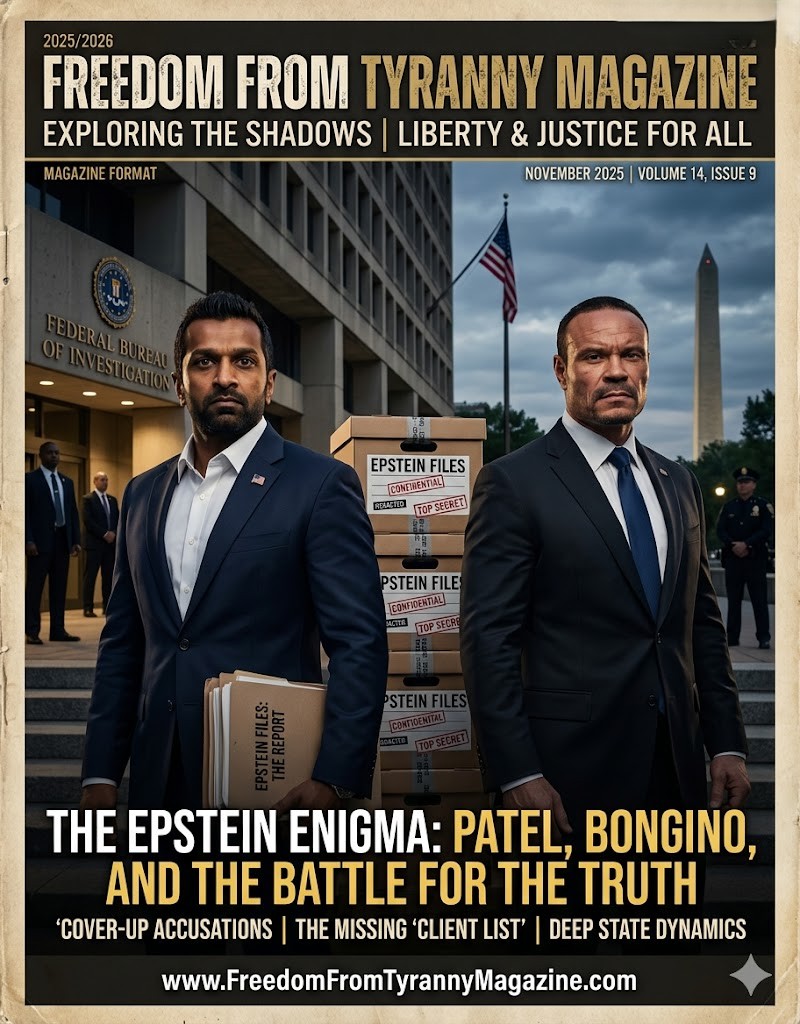
While Patel took the heat in the witness chair, his second-in-command, Dan Bongino, became the subject of a different kind of tactical maneuvering. House Judiciary Committee Democrats sought a subpoena to compel Bongino to testify, believing his unique perspective as a former Secret Service agent and outspoken critic of the “administrative state” would yield cracks in the FBI’s official narrative.
However, in a move that sparked outrage among the minority members of the committee, Republicans blocked the subpoena. This legislative firewall has become a focal point for critics who argue that if there is nothing to hide, there is no reason to prevent the Deputy Director from speaking.
From the perspective of those fighting for Freedom From Tyranny, this move is seen through two lenses:
- The Protective Lens: A necessary defense against a “fishing expedition” designed to harass the FBI leadership.
- The Skeptical Lens: A worrying lack of transparency that mirrors the very “Deep State” tactics Patel and Bongino were appointed to dismantle.
Suicide or Something Sinister?
Perhaps the most polarizing aspect of the 2025 reports is the FBI’s renewed stance on Jeffrey Epstein’s death. Despite years of public skepticism and various “conspiracy theories” suggesting foul play, both Patel and Bongino have doubled down on the 2019 conclusion: Jeffrey Epstein’s death was a suicide.
After a reported “comprehensive review” of the case files, the leadership stated there is no evidence to support the murder theories that have dominated internet forums and independent news outlets for years. For many, this was the ultimate betrayal of the “truth-seeker” brand both men built before taking office. To others, it was an admission that, sometimes, the official story—however messy—is the only one supported by the forensics.
The “Suicide” Conclusion: Key Points Forensic Audit: Patel claims a fresh set of eyes found no inconsistencies in the original medical examiner’s report. Video Evidence: The FBI maintains that while camera failures occurred, no unauthorized entry to the cell was recorded. Motive: The leadership points to Epstein’s realization that his “protectors” were gone as the primary driver for his final act.
The “Trump Connection” and the Missing Names
The most politically charged element of the Epstein files remains the alleged “Client List.” During the hearings, Patel was pointedly asked if Donald Trump’s name appeared in the files. He refused to provide a simple “yes” or “no” in the context of a “list,” instead insisting that the government has no evidence that Epstein “trafficked” victims to the former President.
This nuance is where the battle for the narrative is won or lost. Critics argue that “trafficking to” is a narrow legal definition used to avoid admitting that Trump’s name appears in flight logs or social registers already known to the public. Supporters argue that Patel is simply being a responsible Director by refusing to validate a political hit-job disguised as a quest for justice.
The Counter-Offensive: Targeting the “Real” Predators
Aware of the optics of the Epstein controversy, the FBI under Patel and Bongino has shifted its public relations strategy toward aggressive, highly publicized initiatives targeting active child predators. In late 2025, the Bureau announced several major operations that resulted in hundreds of arrests across the country.
The FBI’s 2025 Record on Child Exploitation:
- Operation Guardian: A multi-state sting targeting online grooming networks.
- The “Dark Web” Initiative: Increased funding for AI-driven tools to de-anonymize traffickers on encrypted platforms.
- Victim Recovery: A reported 15% increase in the recovery of missing minors compared to the previous fiscal year.
By touting these successes, Patel and Bongino are sending a clear message: We are not protecting predators; we are hunting them. They argue that the obsession with the Epstein files is a “distraction” from the work being done to save children today.
The Path Forward: Liberty vs. Secrecy
For the readers of Freedom From Tyranny, the Patel-Bongino era at the FBI represents a complicated paradox. On one hand, these are men who promised to burn down the old guard and expose the rot within the system. On the other, they are now the heads of that very system, utilizing the same tools of redaction and executive privilege that their predecessors used.
Is the withholding of the Epstein files a legitimate protection of sensitive material, or is it the ultimate proof that the “swamp” is deeper than anyone imagined? As we move into 2026, the pressure for a full, unredacted release of the Epstein archives continues to build. Until the names are public and the “pornographic” excuses are set aside, the shadow of the private island will continue to loom over the FBI.
The fight for freedom requires a total commitment to the truth—no matter who it hurts, and no matter which side of the aisle they sit on. The question remains: Will Patel and Bongino be the men who finally open the books, or will they be the ones who finally closed them for good?
What do you think is the primary reason the FBI continues to withhold the full Epstein client list despite the change in leadership?