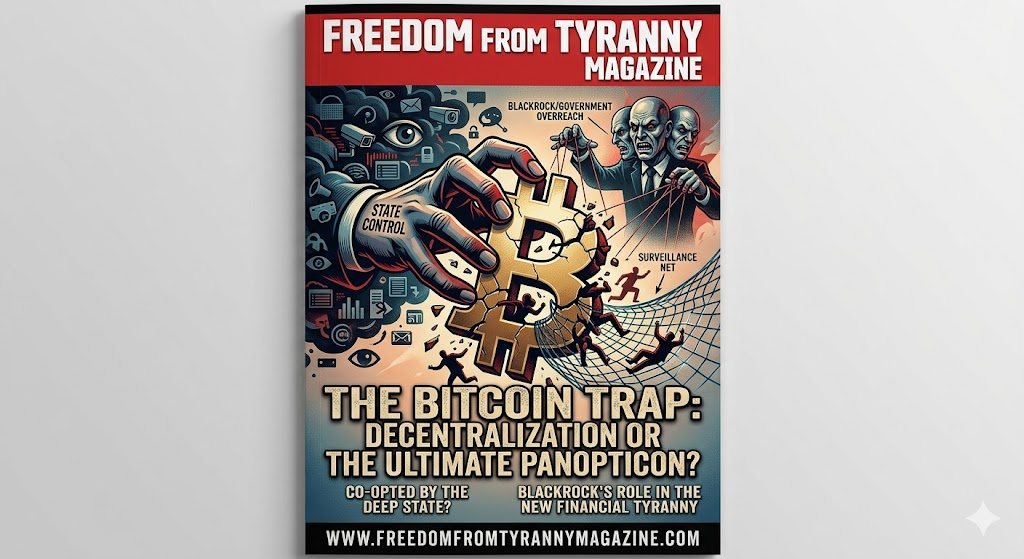
When the white paper for Bitcoin was released in 2008 by the mysterious Satoshi Nakamoto, it was hailed as the “Great Liberator.” In a world reeling from the financial collapse orchestrated by central banks and “too big to fail” institutions, Bitcoin offered a radical alternative: a peer-to-peer electronic cash system that required no intermediaries. No banks, no government oversight, and—crucially—no permission.
However, as the years have unfolded, the narrative of Bitcoin as an unstoppable force for freedom has collided with the cold reality of state survival. If history teaches us anything, it is that no government, especially one as entrenched as the American “alphabet soup” of the FBI, CIA, and NSA, allows a rival to its power to exist without either crushing it or co-opting it.
The Illusion of the Early Raids
In the early days of Bitcoin’s adoption, the primary interaction between the state and the crypto-sphere was one of violence. High-profile cases like the takedown of the Silk Road in 2013 and the arrest of Ross Ulbricht are often cited as evidence of the government’s hostility toward Bitcoin. During these operations, the FBI didn’t just arrest individuals; they seized massive troves of Bitcoin—at one point becoming the holders of the world’s largest digital wallet.
For many observers, this was the first red flag. In the world of intelligence and power, if an agency raids an “office” or a platform and the technology continues to flourish under the same parameters, it is rarely due to the agency’s failure. It is often because the technology has been repurposed. If the FBI raids a business and leaves it “open for business,” the business is no longer yours; it’s theirs.
The suspicion remains: Did the state realize early on that they couldn’t stop the code, so they decided to own the infrastructure instead? By leaving the Bitcoin network operational, they essentially left a digital honeypot active, waiting for those who believed they were operating in the shadows to step into the light of the public ledger.
The Public Ledger: The Perfect Surveillance Tool
The great irony of Bitcoin is that the very feature touted as its strength—the Blockchain—is a law enforcement officer’s dream. Unlike cash, which leaves no trail, every Bitcoin transaction is recorded forever on a transparent, immutable public ledger.
While Bitcoin is pseudonymous (meaning, your name isn’t on the transaction), it is not anonymous. Every transaction can be traced back through its history. Modern forensics used by the NSA and private contractors like Chainalysis have become so sophisticated that they can map entire networks of users based on a single “leak” of identity—such as moving coins to a regulated exchange or purchasing a physical item.
The government’s apparent tolerance for Bitcoin may be a calculated move. For every criminal who thinks they are being “clever” by using Bitcoin to move funds, there is an analyst at a desk in Maryland or Virginia waiting for them to make a single mistake. Once that mistake is made, the entire history of their financial life is laid bare. This isn’t freedom; it’s a permanent digital record of every “rebellious” act.
The Entry of the Titans: BlackRock and Vanguard
Perhaps the most disturbing development in the Bitcoin story is the recent pivot by the giants of Wall Street. For years, the heads of these institutions called Bitcoin a “fraud” or a “scam.” Today, BlackRock and Vanguard are moving billions into Bitcoin ETFs.
Why the sudden change of heart? For those who understand the “revolving door” between the Treasury Department and the boardrooms of the world’s largest asset managers, the answer is clear. These entities do not “believe” in the product in a philosophical sense. They are the financial arms of the prevailing order.
When BlackRock buys Bitcoin, they aren’t just investing; they are centralizing. By bringing the “decentralized” currency into the fold of the traditional financial system through ETFs and custodial services, they are effectively domesticating the beast. They are turning a tool meant to bypass the system into a tool that is dependent on it.
Conclusion: The Price of Vigilance
The claim that Bitcoin has been compromised by the very entities it sought to replace is a heavy one, but it is supported by the historical behavior of the state. The FBI, CIA, and NSA do not exist to protect your privacy; they exist to maintain control. If they are allowing Bitcoin to stay operational, and if their financial proxies are buying it by the boatload, we must ask: Whose interests does Bitcoin serve today?
For the individual seeking true freedom from tyranny, Bitcoin may no longer be the silver bullet it was promised to be. True privacy requires more than just a digital wallet; it requires a fundamental rejection of the surveillance state’s infrastructure. In the digital age, the only thing more dangerous than a tyrant you can see is a “liberation” tool that reports back to the tyrant in real-time.